54 Wrightstown-Cookstown Rd
P.O. Box 0128
Cookstown, NJ 08511-0128
Phone: 800-221-0208 • Fax: 609-758-1774
Email: jonesc@drytechinc.com
Desiccant Capacity |
N/A 22 lbs (10kg) |
Connection to Tank |
N/A 1" FNPT |
Transformer mVa |
N/A 180 mVa |
Transformer Oil Quantity |
N/A 68,150 liters |
Height (mm) |
N/A 645 mm |
Construction |
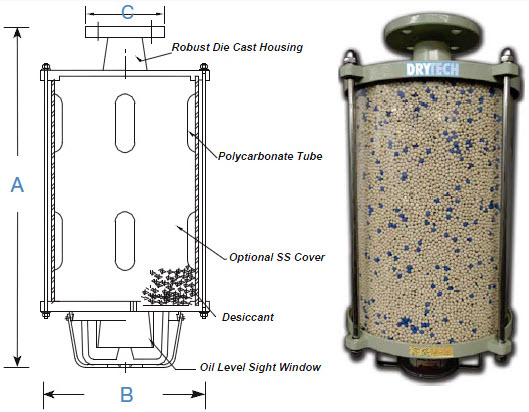
N/A Die cast aluminum end caps, UV Polycarbonate tube, optional SS or expanded metal covers available |
|
Protection of transformer conservator tank oil by preventing entry of moisture and particulate |
|
Zeolite |
N/A Blue to beige |
Body |
N/A Aluminum pressure die casted |
Container |
N/A Acrylic/Polycarbonate/Glass (Seamless without joint) |
Oil Cup |
N/A Acrylic/Polycarbonate (with oil level marking |
Gasket |
N/A Nitrile |
Paint |
N/A Powder coated |
|
Advantages |
|
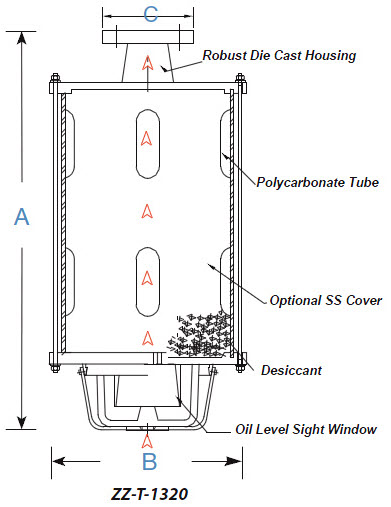
1. Bi-directional Air Flow |
|
Drytech Transformer Breathers operate as your first means of protection againt moisture contamination. Transformer breathers take the approach of filtering atmospheric air BEFORE it enters your equipment, rather than trying to take moisture out AFTER it has been introduced into a system. Inhale Cycle 1. Air will enter the base of the breather 2. As the air is drawn into the breather, the moisture is adsorbed 3. This dry air will then flow upward and into the tank or reservoir being protected 4. The very dry air will blanket the free air volume inside the tank and will liberate moisture from within the tank Exhale Cycle 5. Air will be pushed down through the top of the breather 6. The air will flow back down through the desiccant and out of the bottom of the breather |